7 June 2023

Quito Plus

At 2,850 meters above sea level where we have been living for the last eight years, Quito is the second highest national capital in the world after La Paz, Bolivia.  For our upcoming Andes ascent of 4,800m, we planned to use our five days in Quito to acclimatize to altitude, to explore the old city and to do a couple of day excursions.


In 1534 the Spanish founded Quito on a ruined Incan settlement.   With a population of about 2 million, the city sits along a long, narrow valley, dramatically surrounded by Andes mountains and volcanoes, mostly in the clouds for our five days there.

Because it's old city centre is one of the most extensive and best preserved in Latin America, Quito was recently named a UNESCO heritage sight.  It is dominated by churches, convents, monasteries, an enormous basilica, all accompanied by the compulsory plazas, statues, crosses and cloisters. 
 
The Iglesia de la Compañía de Jesús, the outside carved in volcanic stone. Completed 1765, after 160 years of construction, it is now considered one of the finest examples of Spanish Baroque architecture in South America.  Entrance by closed gates and rather informal guards...

because every inch of the inside is completely covered in gold sheeting.  Appallingly but brilliantly grand.

From one of the towers, which of course we had to climb, the nave rooftop of the Basílica del Voto Nacional.

Basílica del Voto Nacional is impressively large, nicely landscaped and probably continuously under renovation.

We opted to stay in the old city in a small hotel, restored on the outside to original, with very modern architecture - steel rafters, glass walls, bridges from one original building to another inside. The hotel was midway up a very steep hill, excellent training for our quads and hearts.  (We couldn't go anywhere without several steep climbs, up and down.  The steepest had shallow flights of stairs built into the sidewalk but mostly it was a trudge.)  For wandering the old town, the hotel owner, a kind, soft-spoken man, gave us a map with roads coloured red, yellow or green according to their level of safety after dark.  The streets were empty in the evening, even the green ones.  During the day, the city was lively and busy.  Buskers and characters made people watching in the main plaza very entertaining.  We visited a few churches and marvelled in a bit of an indignant way at the riches of the gold gilded interiors juxtaposed to the obvious poverty outside.  An old story!


A noted street renovated for tourists with restaurants, clubs and galleries, was empty.  The historic centre of Quito, like that of Panama City, has not recovered from the covid restrictions on international travels.  Many buildings were abandoned mid-reno.  Restaurants were closed.  Our hotel owner said that he was only starting to get bookings again whereas before the epidemic, the hotel was always full.  Happily, and unlike Panama City, the streets and plaza are bustling with local activity during the day.  But locals do not live there - rent is too expensive - and, hence, we were the only ones on the street after dark...and we go to bed early.


We did a Free Walking Tour.  We hadn't done one since Buenos Aires and had forgotten how great they are.  The guides have to be knowledgeable and entertaining to make their tip money.  It attracts the best.  This guy was no exception.  Here, we were in the central market, mostly closed in the afternoon when we went but the shaman booth complete with medicinal herbs was still busy.  Clients go behind a curtain, strip down and have a branch? or something waved over them so that all ills can be excised.  We saw someone getting treated in the street by a guy (shaman or scammer) who was dancing around him, with a branch and spitting onto the ground.  Intriguing!


Taken from the pool patio of Casa Guayasamin, with a view of what should be snow capped mountains in the clouds.  The dark cone mid photo is part of the gallery featuring Guayasamin's expressionist art featuring emotional portraits and people-scapes.  His depictions of hands whether alone or in a portrait are famously expressive.

The Casa Museo Guayasamin, the home of Oswaldo Guayasamin, was interesting.  Although an atheist of Quechua and Mestizo heritage, his home was not particularly cozy or comfortable, but filled with religious relics and art.  A few pieces of his own art modernized it a bit. 

We took a day trip to Mindo, a small town in a cloud forest.  Only a short distance from Quito, our Spanish only speaking taxi driver, took the only route with steep drops to verdant valleys below.  Road repairs from landslides are ongoing and obviously major.  All we knew about our first stop was that we would see hummingbirds.  We assumed they would be caged like bird sanctuaries we had visited in other places.  We arrived, they immediately plunked us on a bench overlooking beautiful forest, gave us a flower and poured nectar over it.  No explanation...in English, anyway.  And then the birds came!  Wow!  It was incredible.

The little yellow birds were a small version of what we called bananaquits in the Caribbean.  Note the emerald green hummingbird in flight.


They refilled the flower with nectar twice.  And the birds supped heartily, taking turns, some more assertive than others, until, within minutes, completely consumed.
 
Then we were given a plastic bottle top, filled with nectar.  We held it in flat on our palms and the birds came, some sitting on our fingers, some sipping on the go.  

A truly awesome experience.  And the best reuse of a plastic bottle cap!


After feeding wild hummingbirds, the enclosed butterfly sanctuary seemed a bit tame.  

But there were some beauties there too.


And then there was flora.  One of the main exports of Ecuador are flowers.  Roses are sold for about $1US per dozen according to our tour guide. The wild ones were my interest.  The new and the wonderful.  Red bananas

The fruit of the Attorney Tree as identified by iNaturalist.  Very cool.  The human mind does like symmetry, Peter tells me.  And this was perfect.

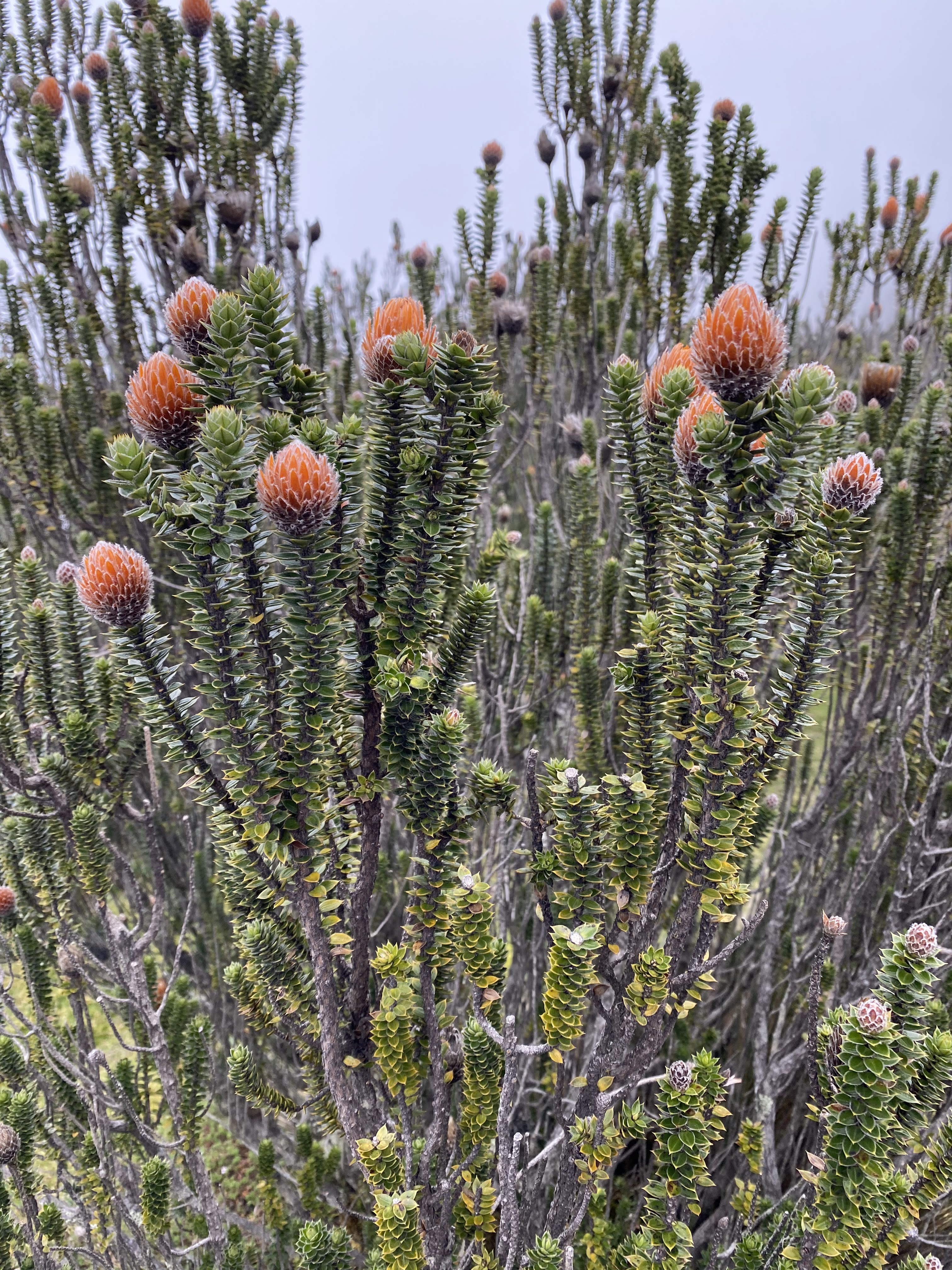
After again being identified by iNaturalist, Wikipedia tells me that Chuquiraga jussieui is the flower of the Andes. It is a low shrub, reaching a height of about 75 cm. Chuquiraga jussieui is an endangered flower (although we saw lots and lots).  Native to Ecuador and Peru, it grows at 3000 to 5000 meters above sea level. Additionally, it contains bioactive components with medicinal properties.  


A ride of faith across a river carved, jungle filled and very deep ravine.  The basket contraption was just a tad sketchy.  530m long it moved at a fair clip so my fingers were crossed for only a matter of minutes.

We took Rita 3.  The most we could do in our abbreviated time.  We would have liked to have managed a couple but that would have meant no hummingbirds!

While beautiful in their lush, green setting, being from Canada, the waterfalls were familiar.  The best part was the hike.

On our last day in Quito, we hiked up the Pichincha Mountain, starting with the Teleferico or gondola to the trails.  Quito, in the valley,was backed by snowcapped volcanos and mountains on the far side.

We hiked up the yellow, then off to the blue, avoiding the exclamation mark and Paso de la Muerte or Pass of Death - a wise choice.  The climb was steep, needless to say, and we had not yet been coached regarding how to manage the altitude so there was a great deal of huffing and puffing.  

Quito on one side of the ridge and verdant farmland on the other.  The country has everything.

And in the other direction, a very steep pitch of grassland and ravines.

Smiling near the beginning of the hike.  Jacket and sweatshirt still done up.

The ascent.  Jacket and sweatshirt now unzipped.  We attempted to climb at are usual brisk hiking pace.  Peter managed better.  I followed behind.  We both felt the altitude.

Nearing the turn off for the Pass of Death.  We were hiking on a Sunday.  We passed many people - or they passed us, who am I kidding - running the trail.  Up at a steady jog and down at a graceful lope.  One woman gave me some hiking tips in hand gestures as she passed me.  Not sure what they were but I was obviously showing my fatigue.

The last bit before turning around.

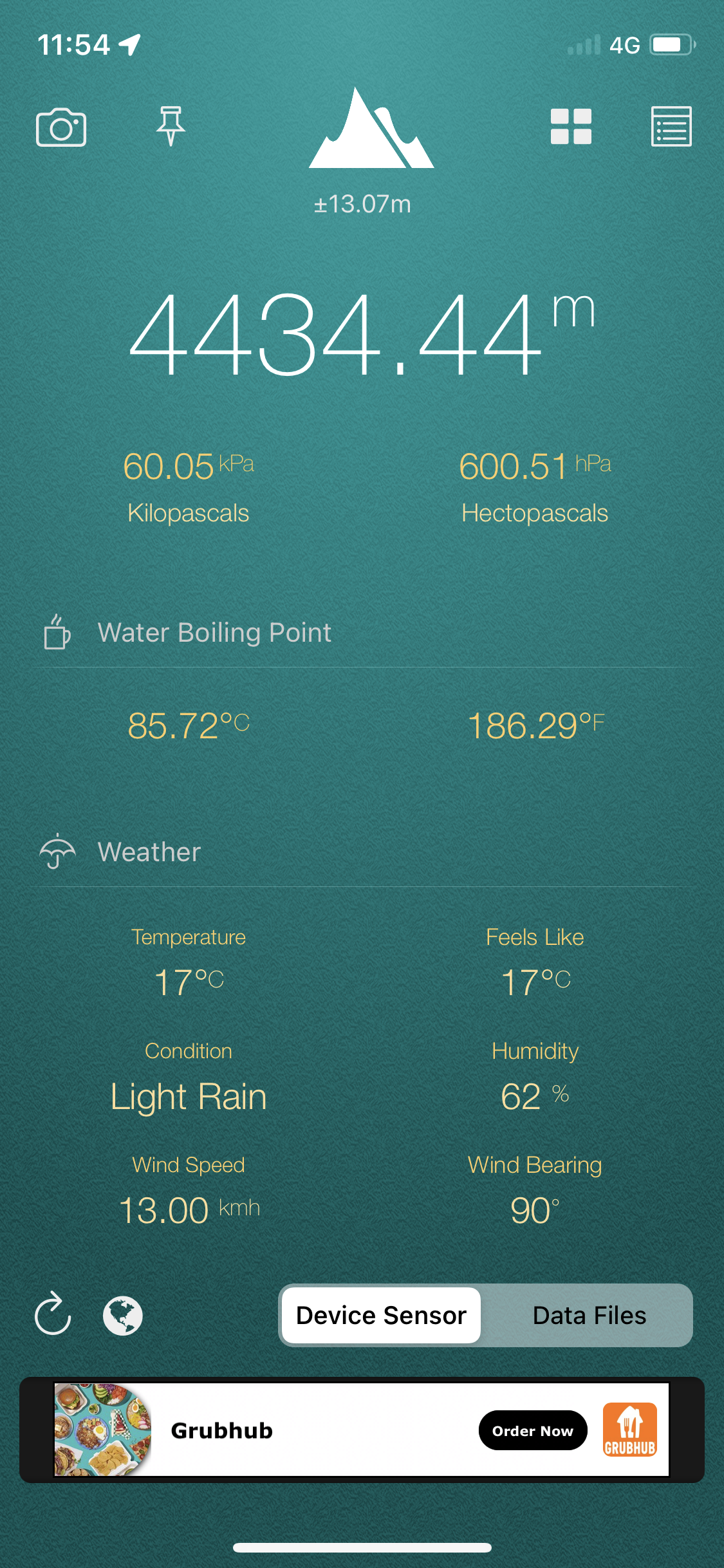
A new record for top altitude hiked.  We felt pretty good about starting our Andes hiking trip the next day, after a good night's rest.

Down!

And still smiling!


6 May 2023

The Galapagos

Posing with the blue-footed booby.  According to our keen, young guide, a wealth of information, the bluer the male's feet, the more attractive to the female.

 Tortoises, iguanas, boobies, sea lions and lots of them, everywhere.  That's what the Galapagos is all about.  As well as volcanic craters, hammerhead sharks, seahorses, finches (of course), wild beaches and only a few, mainly young, ecotourists.  Magnificent!  Definitely worth an explore.  And Peter and I had two weeks to do it before our flight to Quito.

Hints of Darwin were everywhere.  Here with the Beagle, a tortoise and an iguana.  But, strangely, no finch.  He studied many species - ground finch, low tree finch, medium tree finch, high tree finch to name a few.

John and Gill had planned to visit three islands where anchoring was allowed - many of the islands are off-limits to private boats and some even to day tripping tourboats.  We landed at San Cristobal, the eastern most island.  This was the only island where Mehalah could be refuelled by gerry cans delivered to the boat.  Private boats were not allowed access to fuel at the other islands.  Usually this would be no problem.  Yachts could reliably sail from east to west in the trades if the doldrums weren't encompassing the islands.  Being just south of the equator - essentially on it - the doldrums were a real possibility.  


A giant Darwin with sea lion, tortoise.  You quickly get the main theme!

And Darwin Bay on San Cristobal.  Taken from high above, the waters are crystal clear and full of playing sea lions.  When we came back to snorkel with them, the swimming platform was being rebuilt with no access.  Missed it!

Unfortunately, we encountered a once-in-50-years strong wind reversal while we were there - a west to east wind.  To visit the islands to the west, Mehalah would have to motor into the wind, using precious fuel which should be saved for the 3000NM passage to  French Polynesia.  Mehalah was stuck in port.  And so after five days in San Cristobal, having hiked, biked and scuba-ed, Peter and I reluctantly decided to strike out on our own to Isla Isabella, reported to be the most pristine and interesting of the accessible islands.  It was a premature and sad departure from Mehalah and JnG's companionship.  Who knew when we would see them again?

Travel between islands is done on ferry - not the big ship/boats that we would expect on the open sea like those in B.C. or even Toronto Harbour, but 20-25 foot open boats rigged with a hard or soft top.  Our first ride was on a better boat, with airline like seating facing forward.  The second two-hour ride was a more uncomfortable ride on two benches facing each other forward to aft.  Because of the west to east winds we were bashing into the large waves.  With each pound, each person would inch down the bench so that eventually we would squeeze the person at the stern end off the bench.  We'd all then scooch up the bench.  As time went on, the once smiling faces became grimaces as bums numbed and stomachs churned.  We tried not to watch the suffering on the faces across from us.  All were very relieved when the waters calmed as we entered the Isabella harbour.

Our Galapagos explore is best told in photos:

As Mehalah entered the harbour at Puerto Baquerizo Moreno, San Cristobal, we were greeted by curious sea lions, playing around the boat.  We thought they were seals but later learned from a guide that all are sea lions (you can tell by the way they can bend their necks completely back to their spines.  Seals can't do this.  It's all about how they feed.  Seals only dart forward through the water.  Sea lions look all around.  They can dive to 600 feet!  And those that feed on deep fish, dive to the bottom to scrape off their whiskers.  At least that's what the guide said)

We had to tiptoe around the sleeping sea lions snoozing on the water taxi dock.  Certainly didn't want to disturb them.  They are very large with big, yellow teeth when they are bothered.

The only photo we got of a cavorting sea lion doing backflips while his pals napped.

The pups suckle for two years.  When their mums go out fishing, the pups are  "told" to stay where they are on shore.  When the mums come back after some days, they call/yell for the pup.  If the pup has been touched by an outsider/human, the mum rejects him/her.

Relaxing!


This one is out cold.  The benches on the pier were often occupied.  And when vacant they had big oily stains.  Only sea lions used them, needless to say.

On to tortoises.  We visited three sanctuaries - one on each of the islands we visited.  Each island has it's own species, the larger islands sometimes two or three different species.  Introduced and now invasive animals like dogs, cats, rats, donkeys, boars, horses either eat or trample on the eggs or young when their shells are still soft.  Numbers of tortoises were decreasing to dangerous levels until scientists started to collect the eggs, allowing them to hatch and grow in protected areas.  They are returned to the wild where they adapt easily at about three years of age.


We came across them in the wild often on Isla Isabella, this one enjoying a drink during a torrential downpour.

Another wild one not at all disturbed by me.

And then there are the marine iguanas - everywhere.  Many of the beaches have black lava rock one must step on.  The iguanas have evolved to perfectly fit in with the rock - a little bit disconcerting when the rock you are about to step on moves.

Bar by night, iguana sunning spot in the morning.


And then there are a huge assortment of other animals.  Not sure how this brilliant red crab manages to survive.


There are two other land iguana species.  We were lucky to see this yellow one.  The pink iguana lives in the north of Isla Isabella.  Although Isabella is by far the largest island, only about a third of the island is accessible.  The rest is protected.  Unfortunately, the penguins hang out on the northwest coast of the island where a cold current wells up.  The water in the south is too warm for their liking.  I was disappointed not to be able to see them.


The male booby - this guy - finds a flat part of this volcanic rock for a nesting spot.    He marks a rough circle with his guano.  We were specifically told not to step in the areas marked with poop.  He stands in the middle of the marked nest and attempts to attract a female booby by raising one beautiful blue foot and then the other.  This guy was doing his best wooing dance.  Once a female chooses her mate and the eggs are laid and hatched, if the chick ventures outside the circle of poop, he/she is disowned or ignored by it's parents.  Toughest of love.

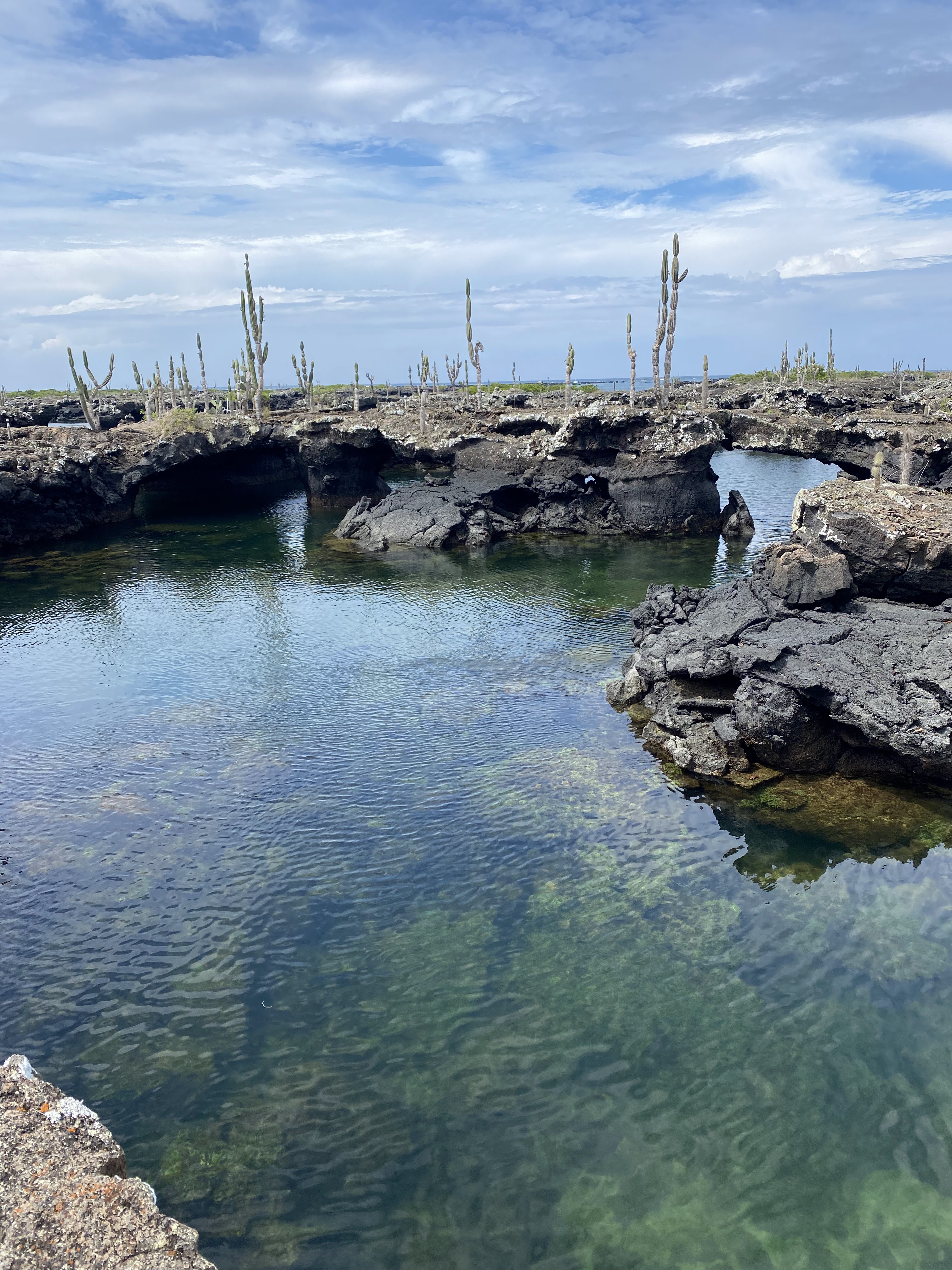
The boobies were nesting in an area only accessible by tour called El Tunel.   El Tunel is about an hour long boat ride from the village on Isabella just north along the west coast.  The cooling lava flow had left strange formations and tunnels when it hit the water.  We snorkelled among the lava pillars and arches in very protected, clear water.

The blue feet did the trick.


Reminiscent of the herons in Ontario.

Lots and lots of birds.  A sweet little crimson flycatcher...I think.

Flamingos in quiet water

During our El Tunel tour our very keen tour guide was also an avid photographer.  Sea horses were abundant and much larger than the rare one spied in Bonaire.  Tranquil, fairy-tale creatures.

Peter enjoying a turtle.  There were so many that our guide warned us not to stop or we'd never get where he was taking us.


We saw five species of rays.  From the boat quite far offshore, we saw what the guide thought was a shark fin.  Turned out to be an enormous manta ray.  It didn't seem to mind the boat getting within a few meters.  It's huge mouth and white mantle were clearly visible while it very slowly swam along.  Magnificent!  We swam with several of these eagle rays.  Very elegant swimmers.

Another ray under an arch that we had to pass through.  Our guide told us to be careful of the tail  and to watch our heads on the rock.  Can't remember the name but that tail looked like a sturdy stinger.

Two Golden Rays swimming in formation.  

A white tipped shark snoozing under an overhang.  There were at least six of them.  


Above is supposed to be a video of three white-tipped sharks swimming with us in a small pool.  It's a great video but I don't think it's working?  We were snorkelling at low tide which meant that the entrance of the pool was very shallow water over jagged volcanic rock.  We became as skinny as we could and still squirmed through with the occasional jab in our tummies.  The sharks were in the pool until high tide.  They weren't too keen on us joining them.  Looked as skittish as I felt.  Very exciting.


Peter and I scuba dived at Kicker Rock just off San Cristobal. The star attraction here were hammerhead sharks.  We had two dives.  The first was to 72 feet.  We were told to hold onto the rocks on a ledge to keep still while the hammerheads swam around just above us.  Unfortunately my legs were very buoyant and I had trouble keeping still which was key.  The guide had to come and remind me.  The hammerheads didn't seem to notice.

Kicker Rock.  And just under that blue surface were lots of turtles, parrot fish,...and hammerheads.  Incredible.  On night passage, I often wonder what is just below us.  The rocks were volcanic, very unlike the coral reefs we had dived on in the Caribbean.  Somehow, a little more forbidding with not as many fish.  But those hammerheads...wow!

And then there were sensational landscapes.  The ultimate infinity pool.  A crater lake, El Junco Lagoon, a hike up and around the perimeter.  Beautiful views.  The frigate birds that we've seen on almost every coast, dip their wings in this freshwater to get the salt off, even though they never land in the sea.  We know from living on Milly, that salt gets everywhere whether in the sea or not.


Peter standing on the edge of the Sierra Negra crater.  It's a precipitous drop to knife-edge sharp volcanic rock.

Volcan Sierra Negra, an enormous crater about 11 km in diameter.  Appropriate to the name, it is edge to edge black volcanic rock.  A stunning sight.

A lava flow tunnel.  The lava hardened on the outside but still flowed on the inside.

As far as we could see, land ravaged by volcanic run off.  Most was black and barren but around here was sulphuric.  Las Minas de Azufre.


As the lava hit the water, it rapidly cooled creating tunnels, caves, pillars and wondrous places to snorkel.


Much of the topography was barren and forbidding but so dramatic.

Like many of the more remote and desolate islands we have visited or sailed by in our eight years, Isabella was the site of a prison.  For no other reason than punishment, the wall was built between 1945 and '59 in  in the unforgiving sun and under vicious supervision.  It is 25m tall, built of rough, sharp volcanic rocks gathered and carried from all over the island.  Many suffered and died during it's construction.  The locals believe it is haunted.

And then there are superb beaches...superb because there are so few people on them.  This nameless one we visited after scuba diving.  The authorities dictate which beach each tour boat can go to each day.  This means there is one boat anchored in a protected bay with only the 12 divers and the iguanas.  

Gorgeous El Chino Beach on San Cristobal.


The only town on Isabella, Puerto Villamil, was a groovy little beach town with streets of sand at one end of this wild and wonderful beach.  


After five days, we watched our last sunset on Isabella.  Onto Santa Cruz for two nights.  A quick catch up with John and Gill and heartfelt wishes for fair winds on their passage to French Polynesia.  And then off to Quito for the next stage of our adventure.